

You finish photographing the menu. Every dish is covered, the files are delivered, and the restaurant has exactly what it needs for online ordering.
Then someone starts updating the website.
They need a wide photograph for the homepage. A picture of the chef. Something for a breakfast promotion that feels a little different from the breakfast promotion last month. There are plenty of photographs in the folder, but somehow none of them quite fit.
It is an easy problem to create. When the whole shoot is organised around a list of dishes, everything around those dishes can go unnoticed.
I like to look for those other photographs while the food is already there. The last bit of preparation, a plate being carried, someone breaking into an egg. They take some planning and time, but they give a restaurant much more to work with after the menu has been uploaded.
The menu photograph still comes first
There is nothing wrong with a straightforward photograph of a plate. If I am ordering lunch, I want to see what I am getting. The portion, the ingredients, the way it is served. I do not want to work out which part of an atmospheric photograph is actually included in my order.
That is especially important for delivery menus. Clear, consistent food photography makes dishes easier to compare and helps people understand what they are choosing.
For those images, a repeated angle and similar framing can be useful. The photographs need to sit together as a menu.
The problem comes when that is the only type of photograph a restaurant has. A menu image has a particular job, and asking it to do every other job usually leads to awkward crops and a lot of repetition.
So I would get the clean photograph first. Once that is covered, we can see what else the dish offers.
Before the plate reaches the table
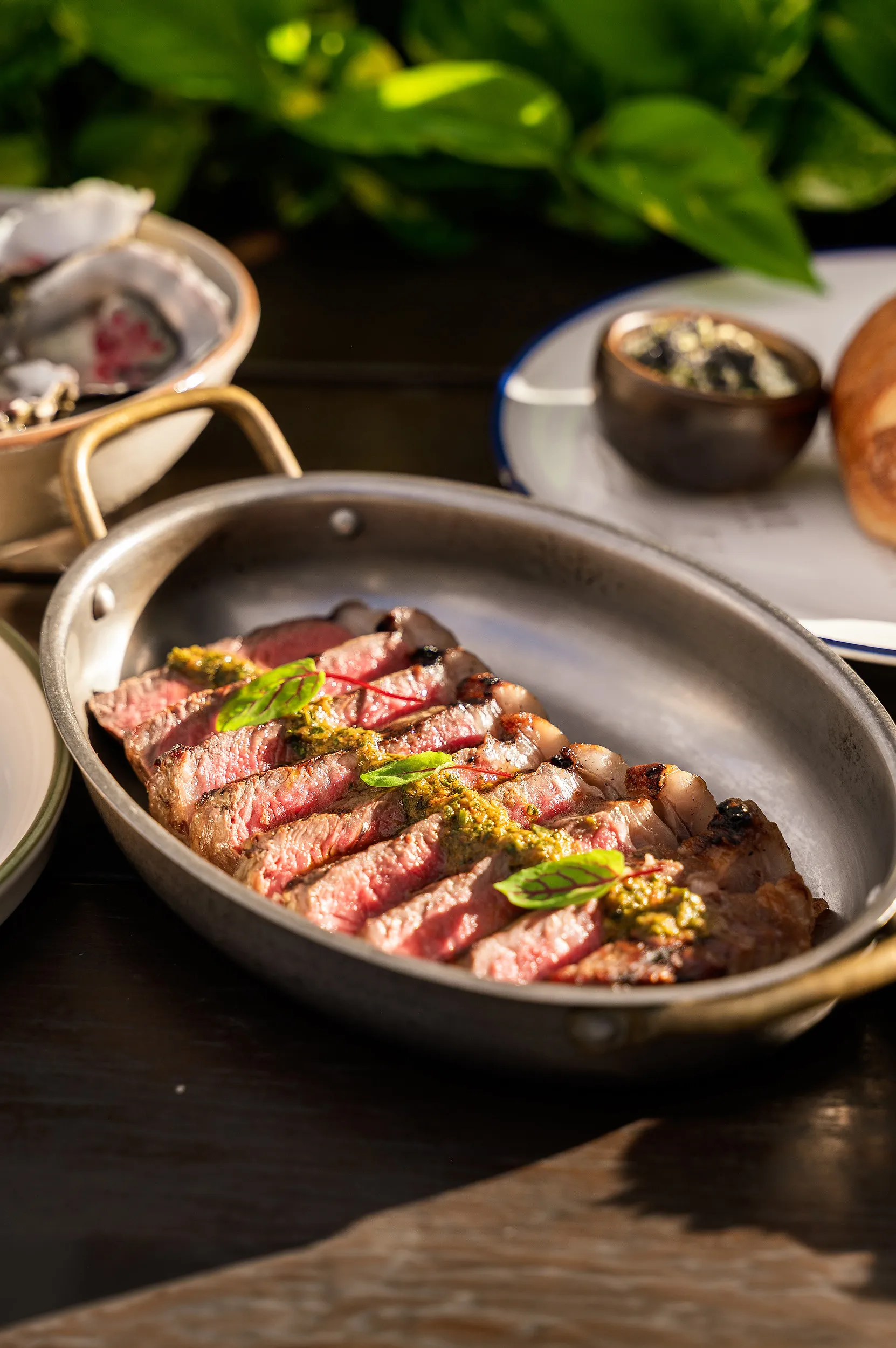
The blowtorch photograph is a good example. There is the steak, the metal pan and that line of flame coming into the frame. You can see something happening to the food.
Photograph the finished steak afterwards and you have a different image: sliced meat, texture, colour and garnish. There is time to look at the dish properly.
I would keep both. The finished plate is useful when the food itself needs to be clear. The preparation shot gives you something with movement for a website opening, a menu announcement or a social post.
The practical part is knowing about that moment before it happens. If the kitchen finishes the dish while the camera is pointing somewhere else, we have missed it. Some things can be repeated; others are better photographed once, at the right point.
That is why a short conversation with the chef can be more useful than arriving with a long list of elaborate ideas. What gets poured, cut, finished or assembled just before service? Which dishes change quickly? What does the kitchen do every day that might make a good photograph?
There is usually something worth watching.
Hands can change the whole photograph
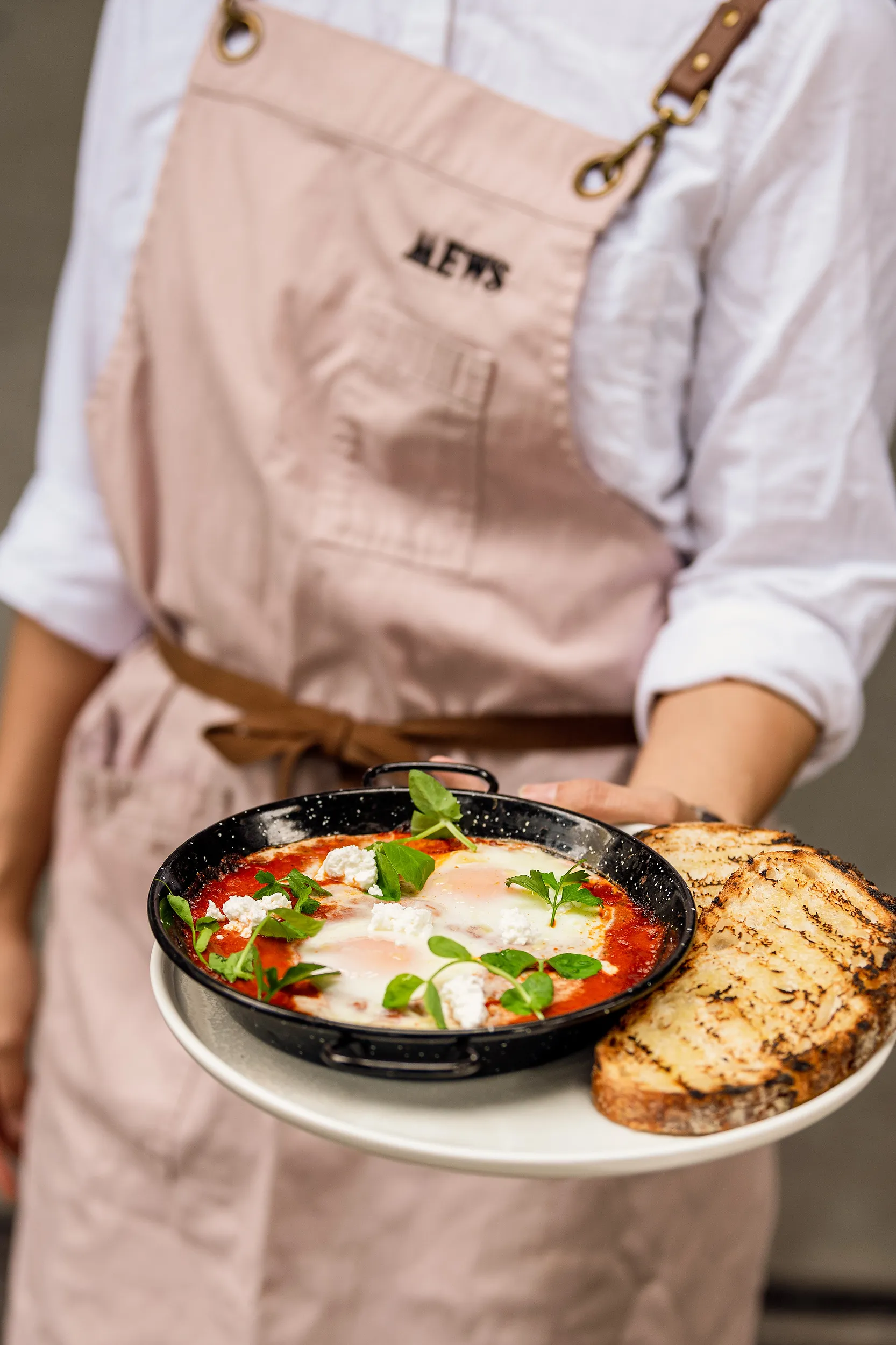
Take the shakshuka. On its own, you have the pan, the eggs, the sauce and the bread. Put it in someone’s hands and the photograph starts to feel like service. Someone is bringing that breakfast towards you.
The apron also gives the food a connection to the venue. You do not need a full portrait for that to work.
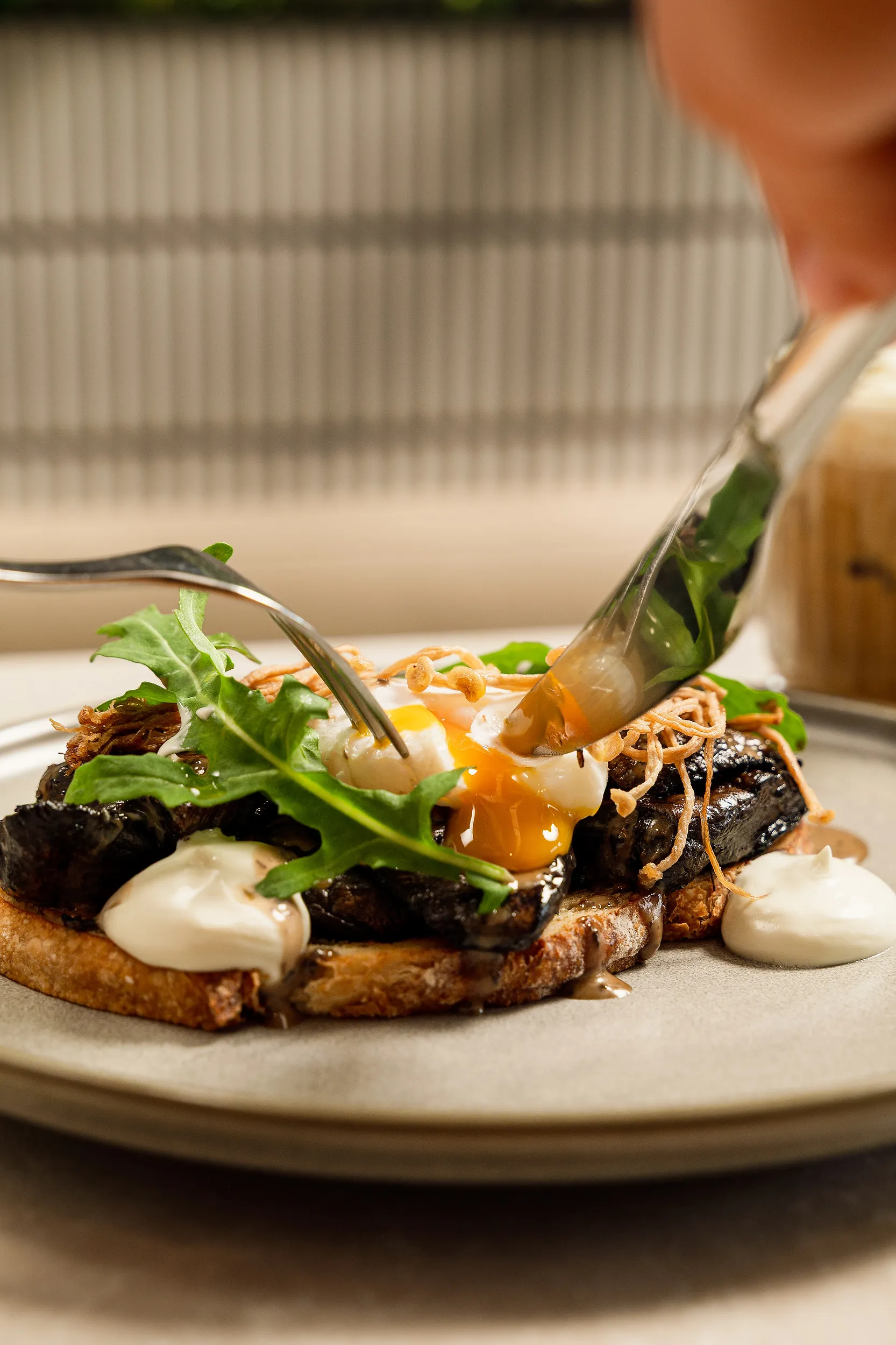
Then there is the photograph of bread going into the dish. Same food, but now the viewer can see how it is eaten. It feels closer to sitting at the table than looking through a menu.
I would photograph that after the untouched plate. Once the bread has been dipped and the egg has been broken, the dish will not look quite the same again.
It is a simple sequence, but it needs to be allowed for. If the kitchen is waiting for the plate back and the next three dishes are already arriving, there is not much room to explore it.

You also want the action to feel comfortable. Hands can look surprisingly awkward when someone is holding a position for a camera. A small adjustment to the grip or the angle of the plate often helps more than asking them to keep still for longer.
Get close enough to show what matters
With sashimi, a wider photograph explains the serving. You can see the selection, the ice, the accompaniments and how everything sits together.
Move closer and you start looking at something else. The surface of the tuna, the cut of the fish, the moisture and the colour.
Those details are worth photographing. They are part of what makes the food appealing, and they can get lost when the whole plate has to fit into a small image.

I would still want the wider view in the collection. A folder full of tight details can become just as limiting as a folder full of identical plates. Someone needs to understand the dish before the close-up can add much to it.
The overhead salmon photograph does another job again. From above, the arrangement becomes the main feature. You see the spacing, the leaves and the shape of the serving.
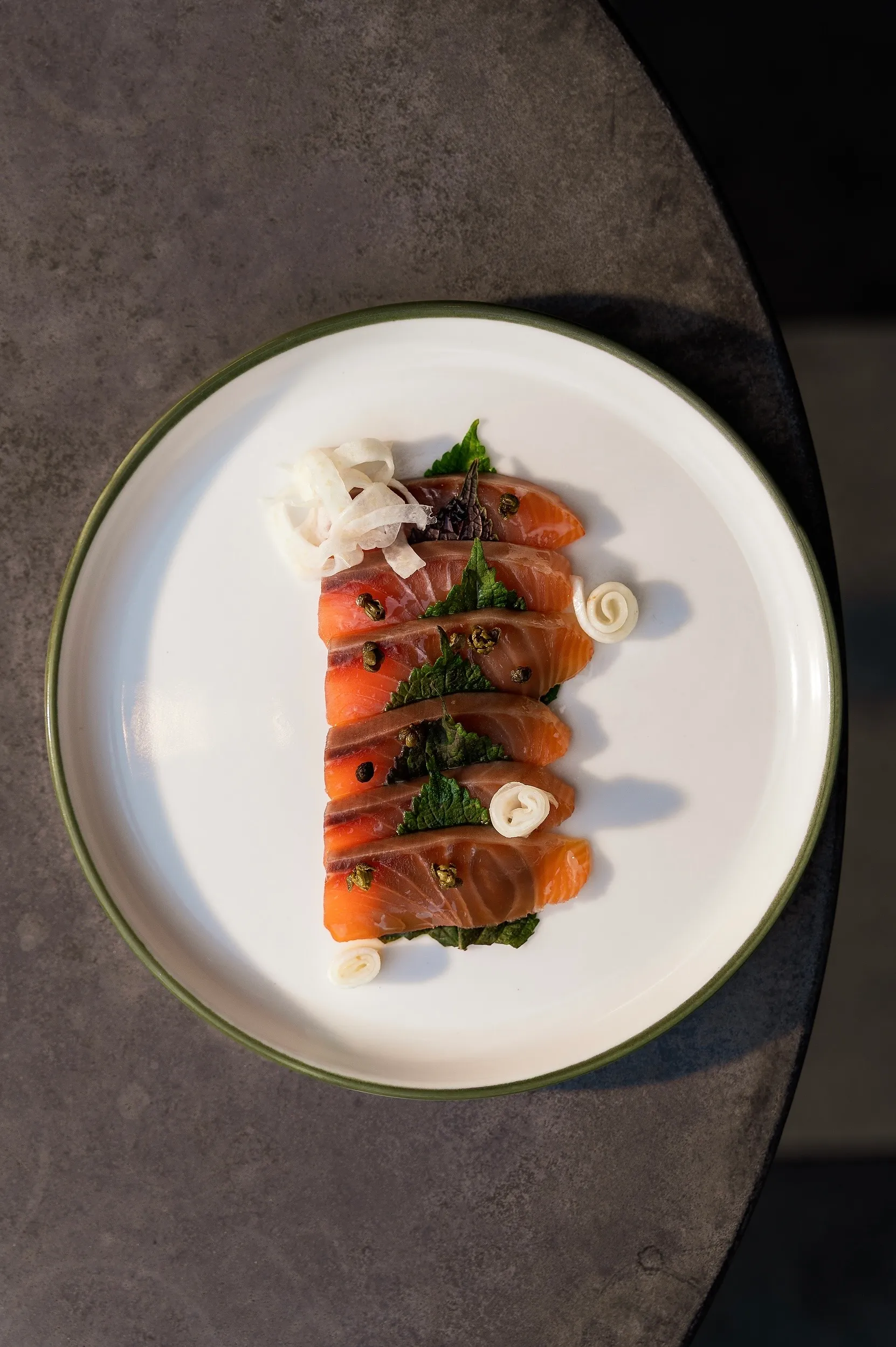
There is no reason to force those two dishes into the same angle for a broader restaurant campaign. For a delivery menu, consistency may be the priority. For a website or a set of social posts, I would rather choose the view that gives each dish something to say.
Think about where the photograph will go
This is where my design background comes into the shoot.
I might like a close crop, but if the photograph is meant to carry a headline, that crop could make life difficult later. Put text across a busy plate and neither the food nor the words get much attention.
Sometimes the useful version is wider, with the dish lower in the frame and a quieter area around it. Sometimes we need a vertical image as well as a horizontal one.
A wider sashimi photograph with chopsticks can leave room above the food. That space is useful for a vertical layout. It does not automatically make it a good horizontal website banner, though. If a banner is needed, I would plan a horizontal composition at the shoot rather than assume we can crop one out afterwards.
These are small decisions when the camera and food are already in position. They become much bigger decisions when someone asks for a different format two months later.
Before a restaurant photoshoot, I want to know which images are needed for the menu, which are for the website and whether there is a particular promotion coming up. “We need photos for everything” is a starting point, but a few actual examples of the layouts are much more useful.
The food is only part of choosing a restaurant
If I am ordering delivery, the dish may be most of what I need to see. If I am booking a table, I also want to know what the place is like.
That is where photographs of the room, the bar and the people become important. A restaurant can have excellent food photographs and still leave a potential customer wondering whether it suits the evening they are planning.
You do not need to photograph every chair and every corner. Look at the website as someone who has never visited. Can they get a reasonable sense of the space? Can they see the seating, the light and the atmosphere?
An empty room can show the layout. A photograph during service can show how the space feels with people in it. They are different images, and the right choice depends on what is missing from the restaurant’s existing photography.
I would check that before adding more to the shoot. If the interior photographs are current and working well, there is no need to replace them just because we are photographing a new menu.
Start with the gaps in your photo library
A broader shoot does not have to mean photographing everything.
If you already have clear images of the menu, the next session might concentrate on preparation, serving and people. If your social feed has plenty of atmosphere but customers cannot get a proper look at the dishes, I would put the food first.
The point is to leave with photographs that have a use.
For a restaurant website, that might mean a horizontal opening image, a few key dishes, a portrait and something showing the dining room. For social media, a sequence of preparation, finished food and interaction gives you several ways to talk about the same part of the menu.
It also helps you avoid using the same photograph every time a dish is mentioned.
A planned business content day can make sense when the list is broader. For a smaller menu update, we can simply agree on a few additional images and allow time for them. Either way, the kitchen needs to know what is happening. Those extra photographs still involve food, staff and preparation.
For the practical details, I have written a separate guide to preparing your restaurant for a food photoshoot.
It should still look like your restaurant
There is plenty we can do with light, composition and careful timing. But I want the photographs to remain connected to what the restaurant actually serves.
Use the proper portions and the usual plates. If we photograph a serving moment, it should feel like your service. If a garnish is only there for the photograph and never reaches a customer, it is worth asking why we are adding it.
The food can be presented carefully without becoming a different version of the dish.
The same goes for people. A small direction can help a serving photograph work, but there is no need to turn every movement into a performance. Often, it is enough to get the camera ready, find the light and let the person do something familiar.
That is what I would aim to bring back from the shoot: the menu covered properly, plus the photographs you will be glad to have when the next website update or promotion comes around.
At Post Studio, I photograph food and hospitality businesses in Brisbane, creating images for menus, websites and marketing. If you have plenty of food photographs but keep struggling to find the right one for the job, get in touch. We can look at what you already have and plan what is missing.