

A beautiful home doesn't automatically produce beautiful photographs.
You can have an expensive kitchen, a spacious living room and a lovely outdoor entertaining area. But if the kitchen bench is covered with appliances, the living room is crowded with furniture and the backyard hasn't been prepared, those features can easily get lost.
The camera sees everything.
A tangled cable behind the television. A towel hanging over the shower screen. A wheelie bin beside the front entrance.
Individually, these details might seem insignificant. Together, they can change how a property feels in photographs.
And when someone is scrolling through property listings, that first impression matters.
I've spent more than 20 years working in photography, design and advertising. One of the most important lessons is that preparation often makes a greater difference than people expect.
Professional lighting, composition and editing are important. But they work best when the property itself is ready.
Here's how to prepare your home for a real estate photography session.
1. Start with the rooms that matter most
Not every part of a property carries the same visual importance.
For most residential listings, the living room, kitchen, main bedroom, bathrooms and outdoor areas deserve particular attention.
These spaces help potential buyers or tenants understand how the property looks and functions.
Start by walking through the home as though you're seeing it for the first time.
What immediately catches your attention?
Is the living room open and inviting, or does it feel crowded?
Does the kitchen look clean and functional?
Can you see the size of the bedroom, or is most of the floor hidden by furniture?
The goal isn't to make the property look like a furniture showroom.
It's to make its best features easy to recognise.
2. Declutter without removing all personality
There's a difference between a home that looks lived in and one that looks visually busy.
Personal belongings aren't necessarily a problem. But too many objects compete for attention.
In the living room, remove unnecessary cables, remote controls, paperwork and anything that doesn't contribute to the overall presentation.
In bedrooms, clear bedside tables and put away loose clothing.
In the kitchen, remove dishwashing products, cleaning cloths and excessive appliances from the benchtops.
Bathrooms benefit from a particularly simple presentation.
Toothbrushes, razors, shampoo bottles and personal toiletries should be stored away.
A clean vanity, neatly arranged towels and a clear shower screen usually photograph much better.
You don't need to remove every decorative object.
A carefully chosen vase, a book or a small plant can help a room feel welcoming.
The important thing is balance.
If an object adds something to the composition, keep it.
If it creates visual clutter, move it.
3. Pay attention to furniture placement
Furniture can dramatically affect how large or small a room appears in photographs.
A sofa positioned too close to another piece of furniture may make the living room feel cramped.
An oversized coffee table can interrupt the visual flow of the space.
Dining chairs pushed out at different angles create unnecessary disorder.
Before the photoshoot, consider whether the furniture arrangement makes the room easy to understand.
Sometimes moving a chair slightly or creating a clearer walkway makes a noticeable difference.
However, don't remove essential furniture simply to make the property appear larger than it is.
Good real estate photography should present the space attractively while remaining an accurate representation of the property.
The objective is clarity, not deception.
4. Prepare the kitchen carefully
Kitchens are often among the most important spaces in residential property photography.
They're also among the easiest to clutter.
Start with the benchtops.
Remove dishwashing liquid, sponges, food packaging, unnecessary appliances and anything stored there simply because it's convenient.
Clean the sink, taps, splashback and cabinet surfaces.
Pay particular attention to reflective materials.
Stainless steel appliances and glossy cabinetry can reveal fingerprints and streaks that aren't immediately noticeable when you're standing in the room.
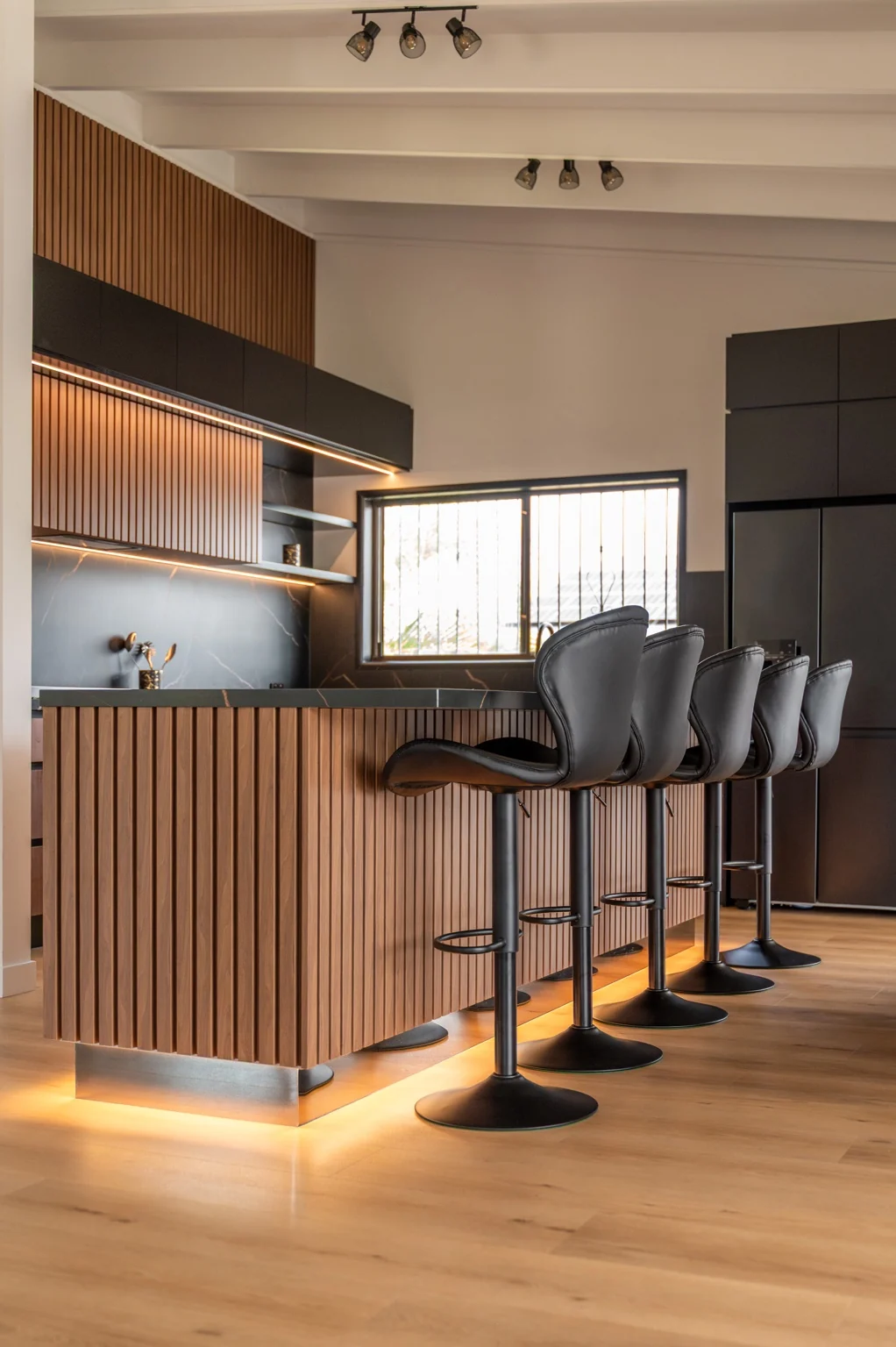
If the kitchen has an island bench, keep it relatively clear.
A small decorative arrangement may work well, but avoid covering the surface.
The photographs should show the kitchen itself, not an elaborate collection of accessories.
5. Make bedrooms look comfortable and spacious
A bedroom should feel calm, comfortable and easy to understand.
Start with the bed.
Fresh, neatly arranged bedding makes an immediate difference.
Straighten the quilt, position the pillows consistently and make sure the bed skirt or sheets aren't hanging unevenly.
Clear bedside tables of chargers, medication, personal items and unnecessary decorations.
If there are clothes hanging behind doors or visible through an open wardrobe, put them away.
Consider the curtains and blinds as well.
Opening them can make the room feel brighter and reveal attractive views.
However, not every window needs to be fully uncovered.
Sometimes partially closed blinds help control harsh sunlight or reduce distractions outside.
The photographer can make the final decision based on the available light.

6. Bathrooms need extra attention
Bathrooms are relatively small spaces, which means every visible object has a greater impact on the composition.
A clean bathroom can photograph beautifully, even when the design is simple.
Clean mirrors, shower screens, tiles and tapware.
Remove personal toiletries, cleaning products, toilet brushes and bins where practical.
Put the toilet lid down.
Arrange towels neatly and check that bathmats are clean and straight.
If the bathroom has a freestanding bath, keep the surrounding area simple so its shape remains visible.
Check the shower screen for watermarks.
These are particularly noticeable when light reflects across the glass.
A few minutes spent preparing the bathroom can save unnecessary distractions in the final photographs.
7. Check your lighting before the shoot
Light plays a major role in how a property appears.
Natural light can make rooms feel open and inviting, but the direction and quality of that light change throughout the day.
In Brisbane, strong sunlight can create significant contrast between bright windows and darker interiors.
Professional photography techniques help manage these differences, but preparation still matters.
Check that curtains and blinds operate properly.
Replace any broken light bulbs.
If several lights are visible in the same room, try to avoid an inconsistent mixture of very warm and very cool bulbs.
Different colour temperatures can make a room look uneven.
You don't necessarily need to switch on every light.
Sometimes natural light creates a cleaner result. In other situations, interior lighting helps establish atmosphere.
The best combination depends on the property, the time of day and the photographer's approach.
8. Don't forget the exterior
The outside of the property is often the first photograph potential buyers or tenants see.
That makes exterior preparation particularly important.
Mow the lawn, tidy garden beds and remove fallen branches or leaves.
Move wheelie bins away from the entrance.
Put away garden tools, hoses, children's toys and unnecessary outdoor equipment.
If possible, remove cars from the driveway before the photographer arrives.
Check that outdoor furniture is clean and arranged neatly.
For properties with a swimming pool, remove the pool cleaner and any floating equipment that shouldn't appear in the photographs.
Make sure the water is clean and the surrounding area is presentable.
If the property has an outdoor entertaining area, prepare it as you would an interior room.
Straighten the chairs, clean the table and remove unnecessary objects.
Outdoor spaces are particularly valuable in South East Queensland, where patios, decks and entertaining areas can be an important part of how people use their homes.
They deserve the same attention as the kitchen or living room.
9. Think about the weather and time of day
The best time to photograph a property depends on its orientation, surroundings and architectural features.
A home with large east-facing windows may look very different in the morning compared with the afternoon.
A west-facing balcony might receive beautiful late-day light but also experience strong glare.
Some properties benefit from bright, even daylight.
Others look particularly attractive when photographed around sunset, with interior lighting creating a warm atmosphere.
Brisbane weather adds another consideration.
During the warmer months, afternoon thunderstorms can develop quickly.
If exterior photographs are particularly important, it may be worth allowing some flexibility in the schedule.
This doesn't mean every cloudy day is unsuitable.
Soft, overcast light can work extremely well for certain properties.
The important thing is to consider the conditions rather than assuming that the brightest possible sunshine will always produce the best photographs.
10. Prepare the property before the photographer arrives
One of the most effective ways to make a photoshoot run smoothly is to complete the cleaning and preparation beforehand.
If the photographer arrives while beds are being made, bathrooms are being cleaned and furniture is being moved, valuable shooting time can disappear.
Ideally, the property should be ready when the session begins.
That includes arranging access to all rooms that need photographing.
Make sure keys, garage remotes and access codes are available.
If the property is tenanted, coordinate access with the relevant occupants and property manager in advance.
Pets should be secured somewhere safe and comfortable.
If the property is vacant, check that electricity is connected and the necessary lights and appliances are working.
These details might seem administrative rather than photographic.
But they can make a considerable difference to how efficiently the session runs.
11. What about Airbnb and short-term rentals?
Short-term accommodation photography has a slightly different purpose from traditional real estate listings.
A property being advertised for sale needs to communicate its layout, condition and main features.
An Airbnb listing also needs to help guests imagine staying there.
That means paying attention to the experience.
A neatly prepared dining table, comfortable seating area or attractive outdoor space can help communicate how the accommodation is used.
Bedrooms should look ready for guests.
If the property includes a dedicated workspace, make sure it's clean and clearly visible.
Practical amenities can also deserve their own photographs.
A coffee machine, outdoor barbecue, laundry facilities or convenient parking arrangement may be relevant to potential guests.
However, don't photograph amenities that aren't actually included in the accommodation.
Accuracy is important.
Guests should arrive and recognise the property they booked.

12. Should you stage an empty property?
An empty room can be difficult to interpret in photographs.
Without furniture, potential buyers may struggle to understand the scale of a space or how it could be used.
Physical staging can help establish proportions and create a more welcoming atmosphere.
But it isn't always necessary.
The decision depends on the property, the target market and the marketing budget.
Virtual staging is another option, provided the images are clearly identified as digitally staged and the presentation doesn't misrepresent the property.
It's important to distinguish between enhancing a photograph and changing what the property actually contains.
Correcting exposure, colour and perspective is part of professional photographic editing.
Adding furniture, removing permanent fixtures or changing the appearance of a property is something different.
Any digitally altered listing photographs should be handled transparently and in accordance with applicable advertising requirements.
Good photography should help people understand the property, not create unrealistic expectations.
13. How many photographs do you need?
There's no single number that works for every property.
A compact apartment doesn't require the same coverage as a large house with multiple living areas, a swimming pool and extensive outdoor spaces.
The goal is to show enough information for someone to understand the property without repeating nearly identical views.
A useful collection normally includes the main living spaces, bedrooms, bathrooms, kitchen, exterior and any distinctive features.
Additional photographs may be appropriate for a study, separate living area, balcony, garage or other selling points.
For short-term rentals, more detailed coverage of amenities can be helpful.
The final number should reflect the property and how the images will be used.
Quality, variety and clarity matter more than simply producing the largest possible gallery.
14. Professional editing is important, but preparation comes first
Modern property photography often involves combining exposures to manage bright windows and darker interior spaces.
This helps retain detail across areas with very different lighting conditions.
Professional editing also allows for consistent colour, perspective correction and careful adjustments to exposure and contrast.
But editing isn't a substitute for preparation.
Removing a collection of personal belongings from every photograph takes time and may introduce unnecessary alterations.
A poorly arranged room doesn't automatically become attractive through colour correction.
And an untidy garden is much easier to improve before the session than afterwards.
The most effective approach combines a well-prepared property with professional photography and thoughtful editing.
Each contributes to the final result.
See examples of property, interior and brand imagery in the Post Studio commercial photography portfolio.
A little preparation makes a big difference
Preparing your home for real estate photography doesn't necessarily require expensive furniture, professional staging or a complete redesign.
Most of the important improvements are relatively simple.
Clear unnecessary objects.
Clean reflective surfaces.
Prepare the beds and bathrooms.
Tidy the outdoor areas.
Make sure the photographer can access every space that needs to be covered.
These steps help the property look its best while allowing the photographs to remain accurate and believable.
Ultimately, good real estate photography should make it easy for potential buyers or guests to understand the property.
Its layout.
Its features.
Its atmosphere.
And what makes it worth considering.
That's the difference between simply photographing a building and creating images that are genuinely useful for marketing it.
Real Estate and Commercial Photography in Brisbane
I'm Ilya Postnikov, a Brisbane-based photographer with more than 20 years of experience across photography, design and advertising.
Post Studio provides commercial photography throughout Brisbane and South East Queensland, including property, interiors and accommodation photography.
Whether you're preparing a property for sale, updating a rental listing or creating images for a hospitality business, the session can be planned around the property and its intended marketing use.
Preparing a property for photography?Get in touch to discuss the location, requirements and images you need.